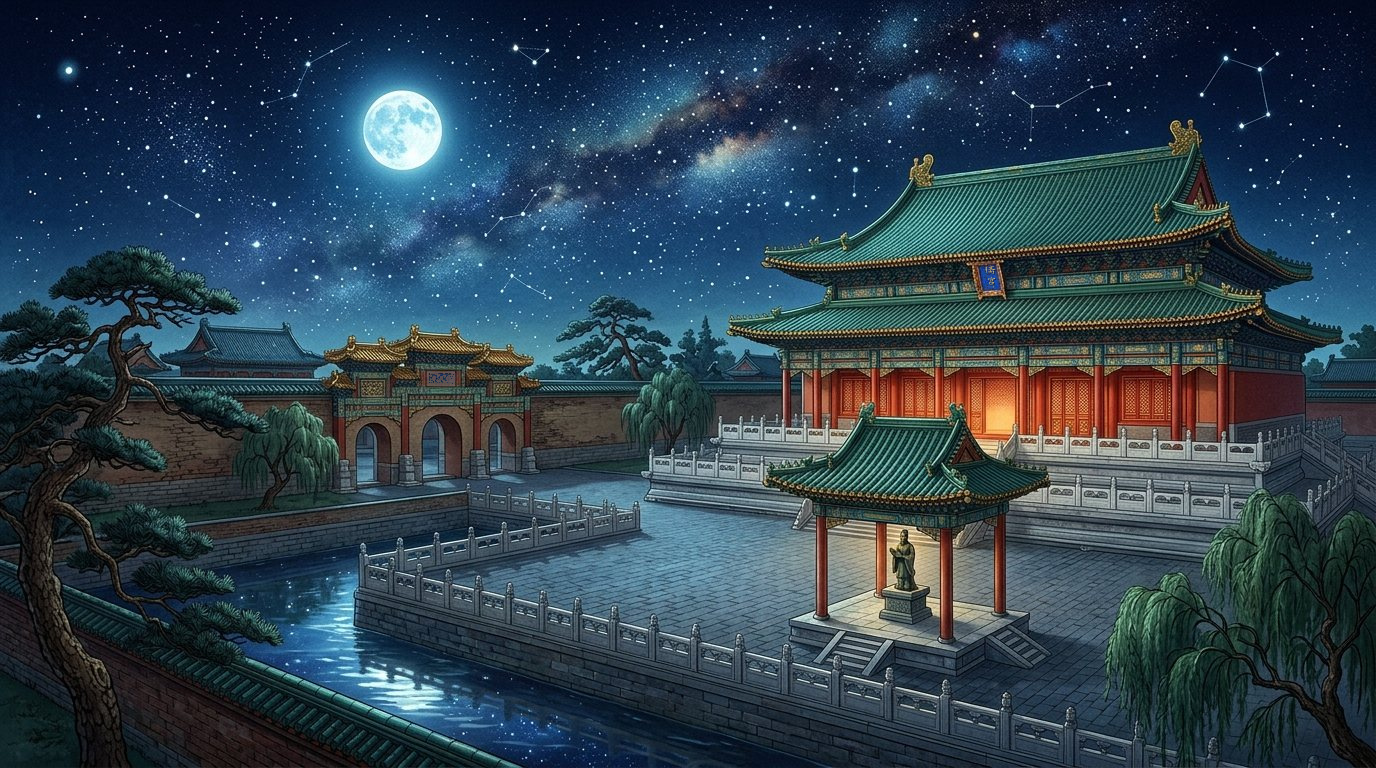
This is where emperors practiced being humble.
Before each winter solstice ceremony, the emperor fasted here for three days: no meat, no wine, no entertainment, no state business, no company at night.
The architecture bows too. The whole palace faces east, not south — because here, the emperor was heaven's subject, not its equal. And the roofs wear green tiles, not imperial yellow.
Inside the main hall you'll find no beams and no pillars — just brick, arched like a cave.
In the courtyard stands a bronze man holding a fasting sign — cast after Wei Zheng, a Tang minister famous for telling emperors the truth. Nobody dared supervise the Son of Heaven; so a bronze one did.
And one emperor found even this too exposed: he moved his fast to the Forbidden City, and came here only the night before, staying just a few hours.
What were the rules of the three-day fast?
The emperor had to bathe, sleep alone, and abstain from meat, alcohol, music, entertainment, court sentencing, and female company to purify himself before addressing heaven.
Why does the palace face east instead of south?
Chinese imperial palaces traditionally face south, but this complex sits west and faces east. Before heaven, even the emperor stood as a humble subject looking toward the sunrise.
Why are the roof tiles green?
In imperial Beijing, golden-yellow tiles were reserved for supreme imperial authority. Using green tiles on this palace was a deliberate architectural expression of modesty before heaven.
What makes the Beamless Hall special?
The main ceremonial hall contains no wooden beams or pillars whatsoever. The entire structure was engineered from self-supporting brick arches, and houses Qianlong's calligraphy plaque "Qing Ruo Hao Tian" honoring heaven.
Why did emperors stop sleeping here for three days?
In 1731, the Yongzheng Emperor feared assassination while staying alone in the open park. He built a fasting palace inside the Forbidden City, reducing his stay here to just four or five hours before dawn.