← All Stops
Bonus Stop · On your route
Bonus Stop · On your route
The Long Corridor
七十二长廊 · Qīshí'èr Chángláng · Temple of Heaven
Listen · about a minute
0:00
0:52
The Story
A corridor with two lives.
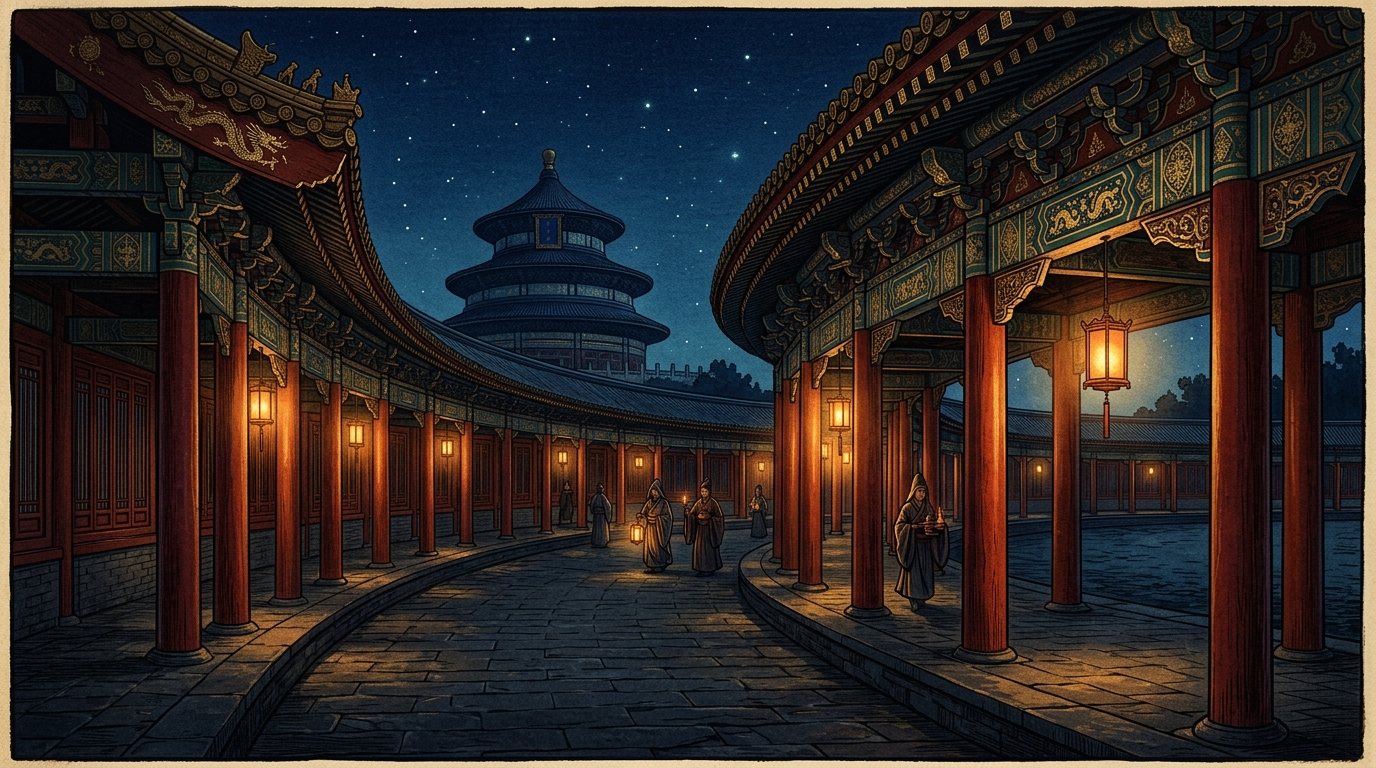
Built in 1420, the same year as the temple itself, this long covered walkway once carried sacrificial food from the kitchens to the altar, sheltered from rain, snow, and dust. Locals nicknamed it "the food corridor."
The deliveries moved by night, by lantern light, hours before the emperor's dawn ceremony.
It has seventy-two rooms — but it began with seventy-five. In 1752, Emperor Qianlong had it rebuilt: even the corridor was re-ranked.
Legend says these rooms became a gathering place for the seventy-two spirits of the earth.
And today? The same roof shelters locals playing cards and chess, tea, gossip, an afternoon. Heaven's supply line became the park's most relaxed room.
Good Questions to Ask Here
Why was this corridor originally built?
It served as a sheltered supply passageway called the "Sacrifice Corridor." It kept food and ritual offerings clean from rain, snow, and dust as attendants carried them from the kitchen to the altar.
Why are there exactly 72 bays?
It originally had 75 rooms when built in 1420, but was redesigned to 72 in 1752. The number 72 aligns with the temple's celestial numerology.
What was it like during imperial rituals?
Ceremonies took place before dawn. Attendants transported the offerings in the middle of the night, carrying candle lanterns through the darkness.
What does tradition say about the 72 rooms?
Tradition says the 72 connected bays were linked with the 72 earthly spirits, adding a layer of cosmic mystery to the corridor.
When did it become a public walkway?
In 1937, the closed corridor was converted into an open covered promenade for visitors and locals to rest.