← All Stops
Bonus Stop · On your route
Bonus Stop · On your route
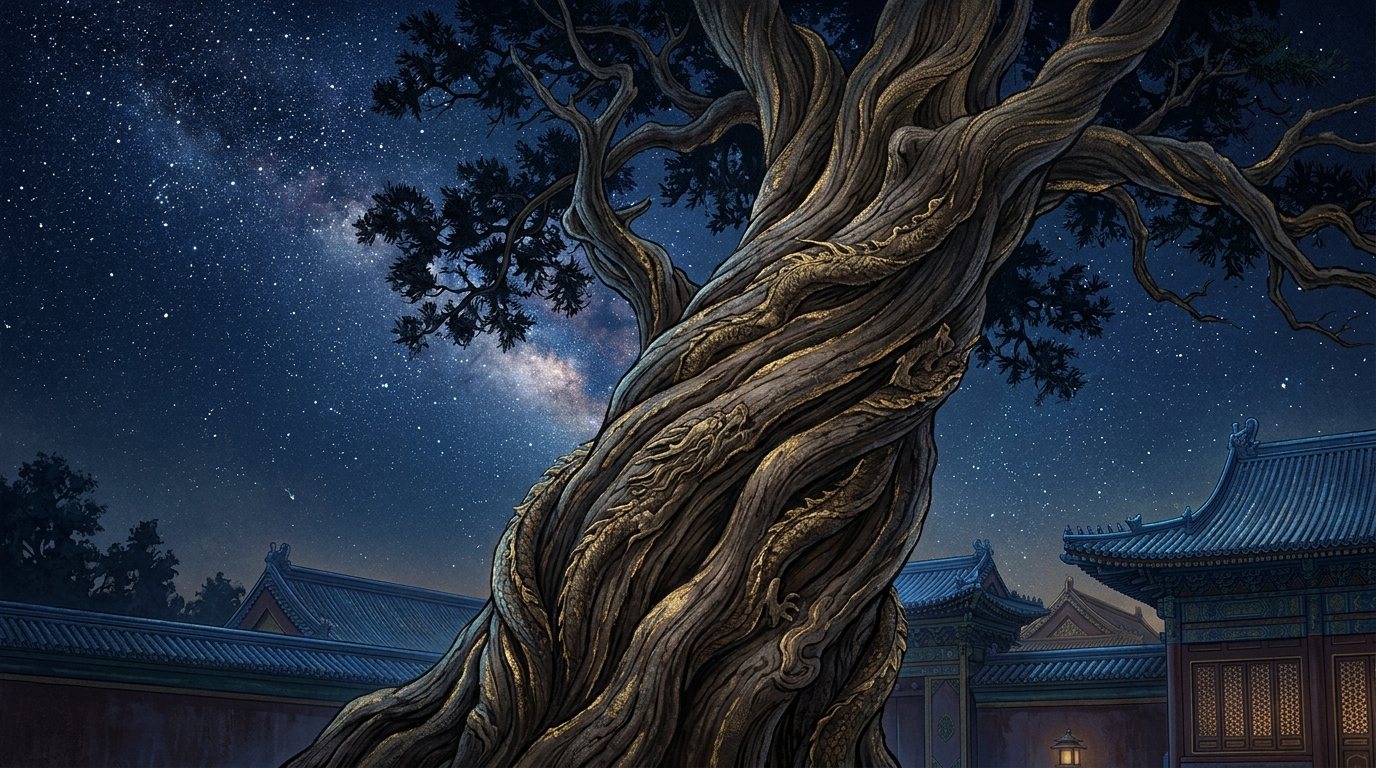
The Nine-Dragon Cypress
九龙柏 · Jiǔlóngbǎi · Temple of Heaven
Listen · about a minute
0:00
0:45
The Story
This tree had a job.
Planted around 1420, this cypress stood beside the road every emperor walked on his way to heaven's altar — and it earned a name: "the cypress that welcomes the emperor."
Look closely at the trunk: nine twisted ridges spiral upward, like nine dragons coiling around the wood. Nothing carved this — no sculptor, no chisel — just six centuries of slow, uneven bark growth, nature's own signature.
And the tree is still growing.
Legend says it began as a divine serpent that took root and turned to wood.
You'll find it right beside the Echo Wall exit, easy to miss in the crowd. Six hundred years of patience, still waiting to be noticed.
Good Questions to Ask Here
How old is this cypress tree?
It was planted around 1420, making it over 600 years old. Even after six centuries, arborists note that it is still slowly growing.
Did someone carve the dragons into the bark?
No. The nine spiraling grooves are entirely natural. They formed through uneven cellular division and healing bark growth over centuries.
Why is it called "Welcoming the Emperor"?
It stands beside the northwest exit of the Echo Wall courtyard. Ming and Qing emperors had to pass right beside it on their ceremonial route to the sacred altars.
What is the legend behind its name?
Legend says the Qianlong Emperor noticed the nine dragon-like coils while passing by and bestowed the name Nine-Dragon Cypress upon it.
Where exactly can I find it?
Look right outside the northwest exit of the Echo Wall (Imperial Vault) enclosure. It is directly on your walking route toward the Danbi Bridge.